Three Reasons to Worry About Rising Treasuries
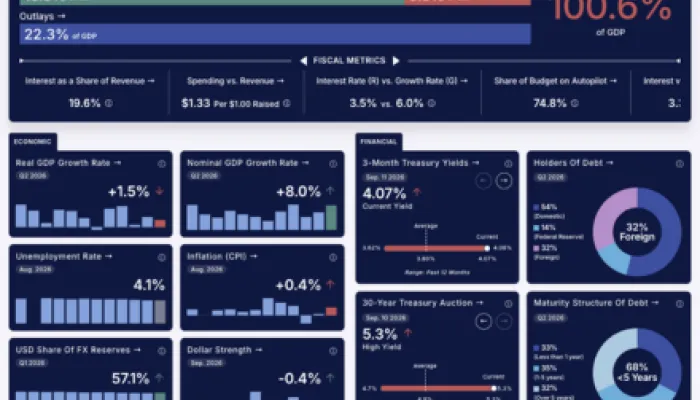
Interest rates on U.S. Treasury bonds recently rose to levels not seen in decades. A recent 30-year Treasury auction ended with yields at over 5.2% – the highest at auction since 2001. Market yields rose further, reaching over 5.3% on August 17, the highest level since 2007. Analysts cite a variety of factors driving the rise, including economic fallout from the war in Iran, persistent inflation, competition for borrowing due to AI investment, and increasing federal budget deficits. The Congressional Budget Office recently raised its estimate of the FY 2026 deficit from $1.9 trillion to $2.1 trillion, with a $432 billion deficit in July alone.
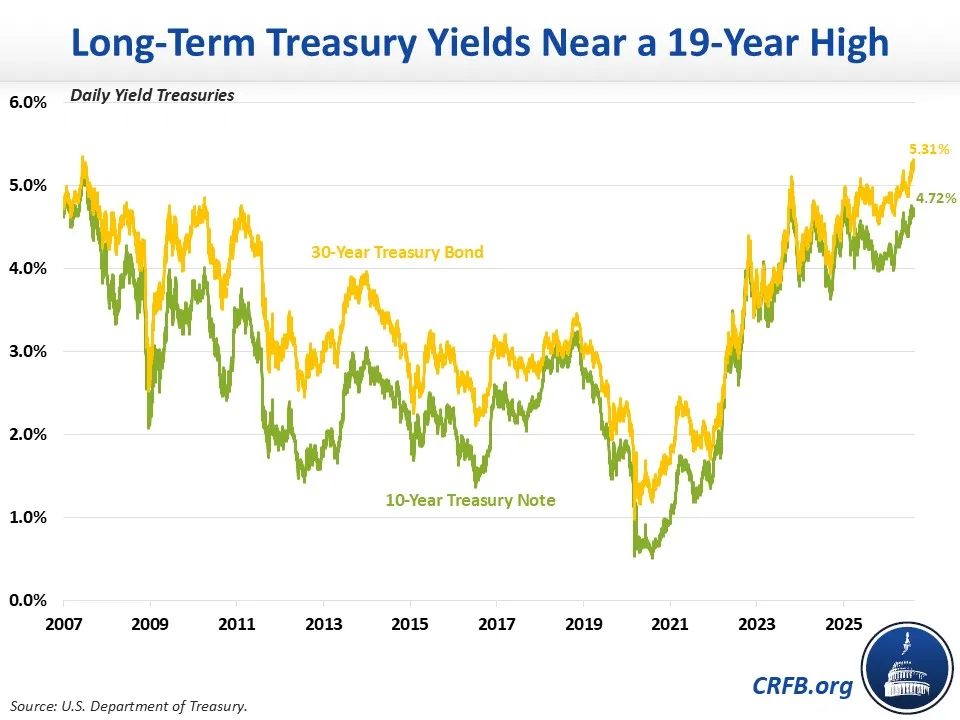
Here are three reasons to worry about higher interest rates on Treasuries:
1) Higher Rates Harm Affordability
Treasury rates serve as the benchmark for borrowing throughout the economy. As Treasury rates rise, so too do the interest rates for home mortgages, auto loans, and credit cards. For example, 30-year mortgage rates recently rose to 6.7%, the highest in about a year. Rising borrowing costs discourage capital investment, harm small business formation, weaken housing affordability, and ultimately slow wage and economic growth. One of the best things policymakers could do to address affordability concerns is to reduce federal borrowing and put us on a path to achieve a 3% deficit-to-GDP target.
2) Government Interest Expense Grows Even Larger
Increased Treasury rates, combined with historically high debt lead to skyrocketing interest costs for the federal government. Over $1 trillion will be spent this fiscal year on interest alone, with more than $16 trillion total projected over the coming decade. But if interest rates remain high this year and are 1 percentage point higher than projected over the next decade, it would add another $3.5 trillion to the debt. Interest is the fastest growing line item in the budget, and we’re spending more on interest than on defense or Medicaid. Every dollar spent on interest is one that cannot be used elsewhere, reducing flexibility for the government to respond to emerging threats and opportunities.
3) We Risk Entering a Debt Spiral
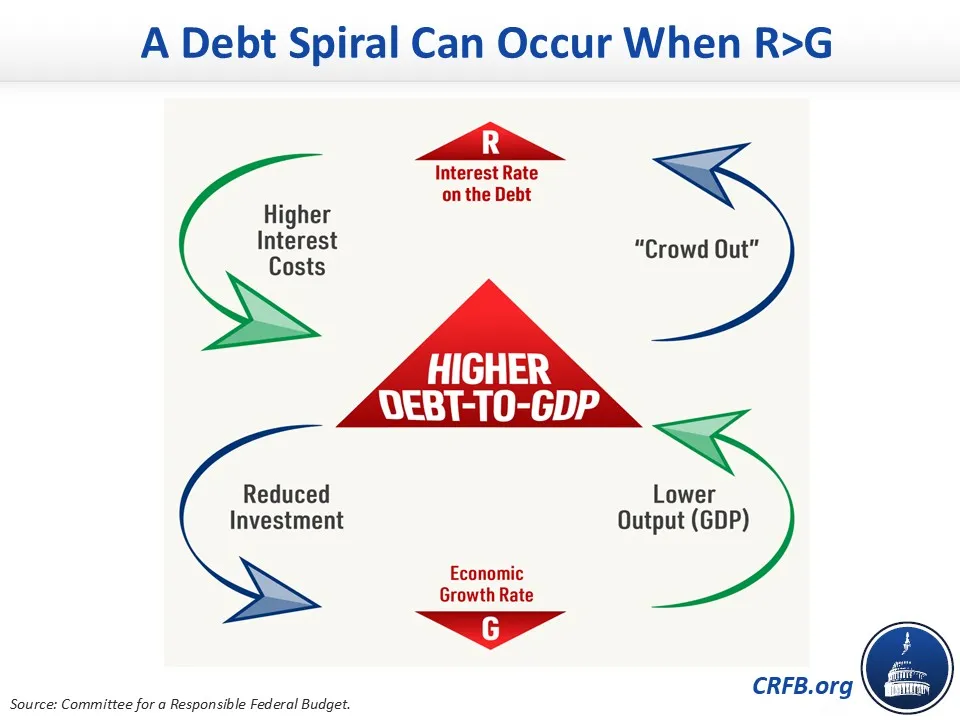
While no one knows when the actual debt “tipping point” will occur, one thing that becomes increasingly likely as rates rise is a potential debt spiral. This can occur when the average interest rate paid on debt is higher than the rate of economic growth. For most of the last 60 years, the interest rate has been below the economic growth rate except for brief periods of economic contraction. But since 2023, most new debt has been issued at rates above the expected long-term growth rate. Once the average interest rate on debt exceeds the growth rate, the debt-to-GDP ratio grows indefinitely – potentially leading to a fiscal crisis.
The best way to mitigate rising costs from high Treasury interest rates is through thoughtful and responsible fiscal reforms that limit additional borrowing, put downward pressure on interest rates and inflation, and put our debt on a more sustainable path.