Net Interest Costs Will Double, Again, Over the Next Decade
Net interest on the national debt, the fastest growing part of the budget, is projected to more than double from $970 billion in Fiscal Year (FY) 2025 to $2.1 trillion by FY 2036 under the Congressional Budget Office's (CBO) latest baseline. That’s after already having doubled from 2022 levels and having nearly tripled from 2020 levels.
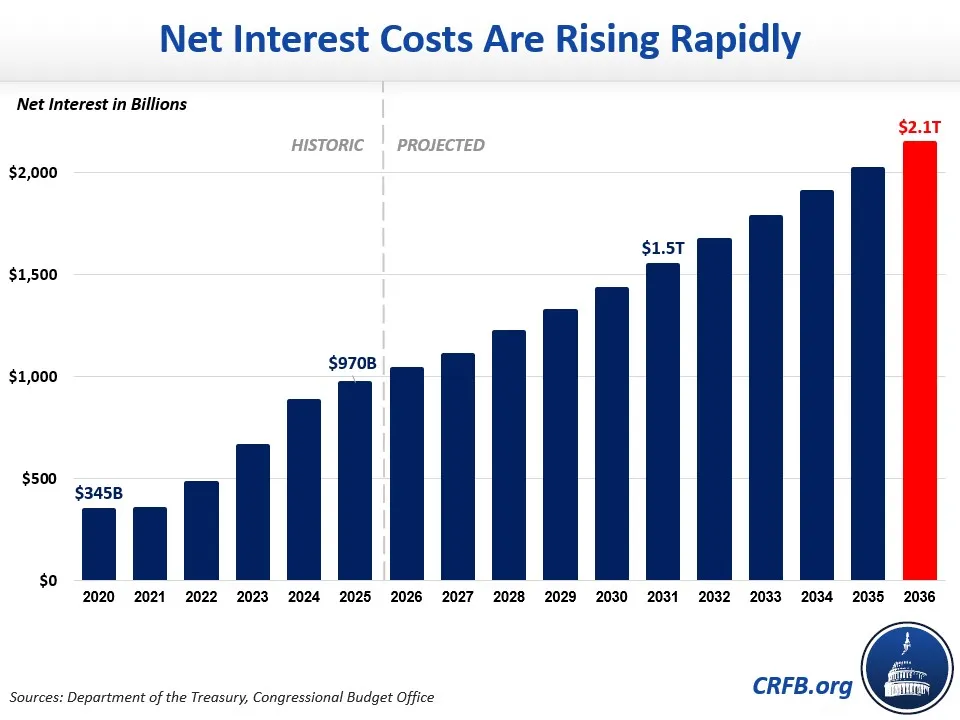
As a share of the economy, interest costs have grown from 1.6% of Gross Domestic Product (GDP) in 2021 to a record 3.2% in 2025, and are projected to grow further to 4.6% by 2036. By that year, interest will consume one-quarter of all revenue, up from one-fifth (18.5%) today and one-tenth back in 2021.
These rising interest costs are driven by a combination of rising debt and rising interest rates. Between 2025 and 2036, CBO projects debt held by the public will grow by 86% ($26 trillion) and the average interest rate paid on debt will grow by 16% (0.5 percentage points), leading interest costs to grow by 121%.
These rising interest costs will explain 28% of all nominal spending growth and account for 120% of all spending growth as a percentage of GDP over the next ten years.
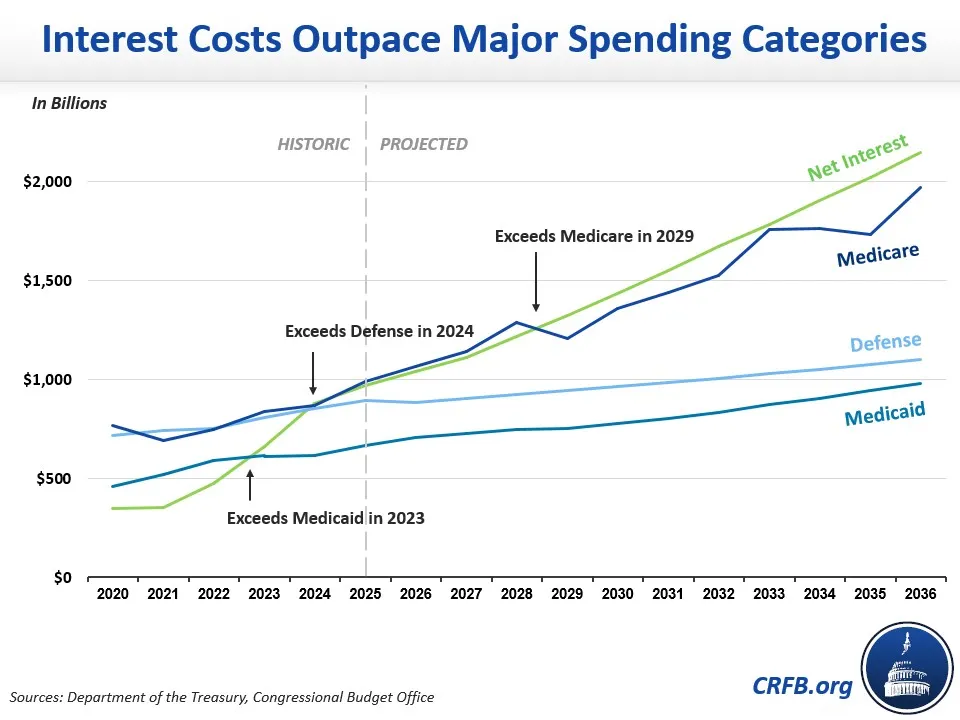
Interest is the fastest growing major program in the federal budget, and is one of the largest. The federal government spends more on interest than on Medicaid, national defense, or total non-defense discretionary spending. The government spends about as much on interest as on Medicare, and is projected to spend more starting in 2029, when it will become the second largest government program. By 2047, CBO projects interest costs to exceed Social Security spending, making it the single largest government program.
As interest costs continue to grow, they will consume a growing share of revenue and increasingly crowd out other priorities. A thoughtful deficit reduction plan can help keep interest costs at bay by putting the debt on a more sustainable path, putting downward pressure on interest rates, and strengthening economic growth.