U.S. Ran a $2 Trillion Deficit Last Year, We Estimate
Fiscal Year (FY) 2026 ended yesterday. Although official figures have not yet been released, our preliminary estimates show high and rising deficits and debt. For FY 2026, we estimate:
- A budget deficit of $2.0 trillion, or 6.2% of Gross Domestic Product (GDP).
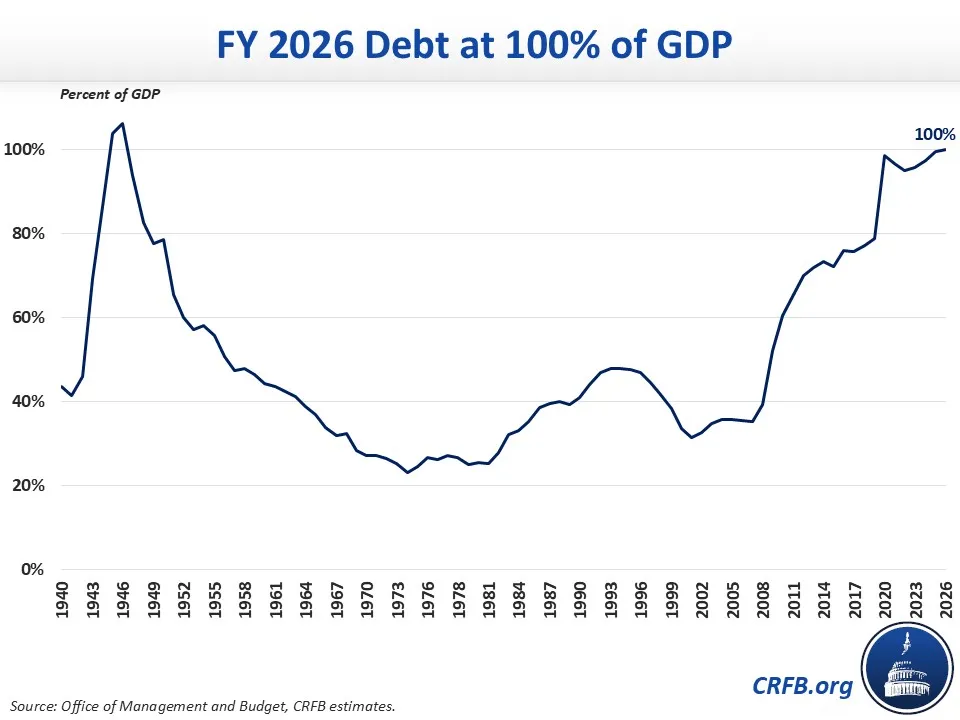
- Debt held by the public of $32.3 trillion, or 100% of GDP.
- Spending of $7.4 trillion, or 22.9% of GDP.
- Revenue of $5.4 trillion, or 16.7% of GDP.
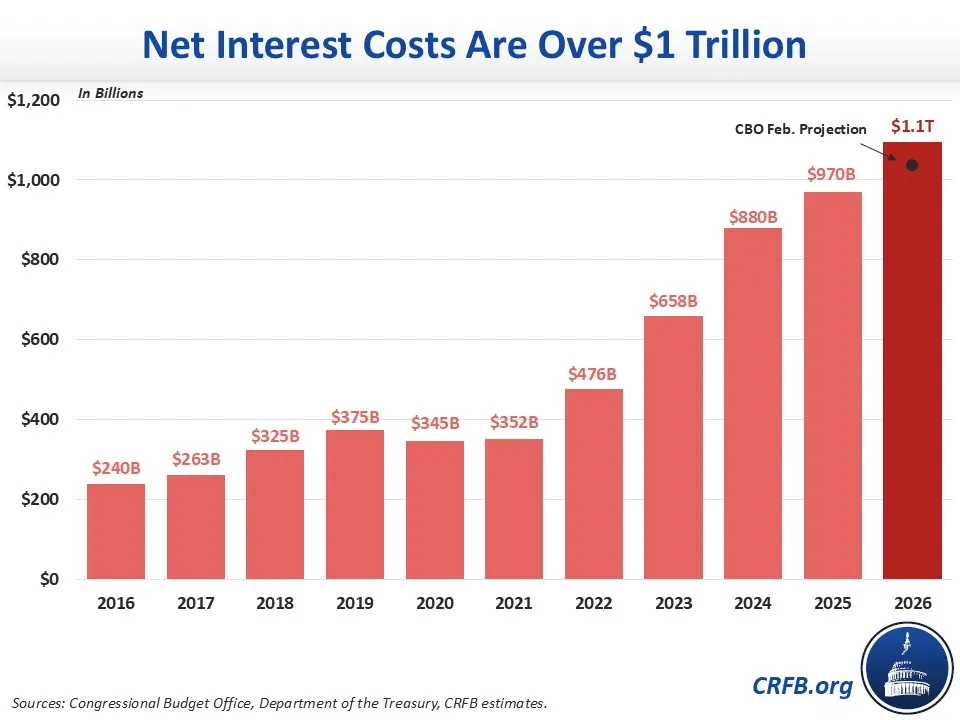
- Interest costs of $1.1 trillion, a record 3.4% of GDP.
- Interest was the second largest line item in the budget, costing more than defense or Medicare.
At $2.0 trillion, we estimate budget deficits were about $210 billion above FY 2025 levels, $135 billion above the Congressional Budget Office's (CBO) February projections, and about $305 billion higher than what the Council of Economic Advisers had projected.
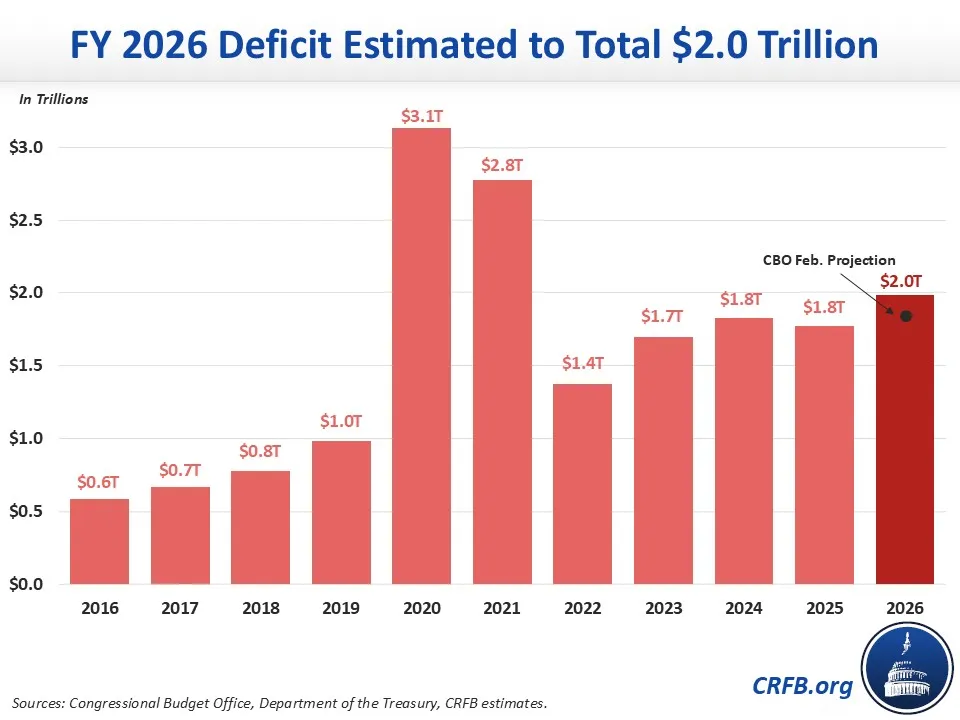
FY 2026 revenue collections totaled an estimated $5.4 trillion (16.7% of GDP) while spending totaled $7.4 trillion (22.9% of GDP).
We estimate that revenue increased about $160 billion relative to FY 2025 but fell 0.5 percentage points as a share of GDP, as higher income and payroll tax revenue was offset by significantly lower corporate tax revenue and relatively flat tariff collection (despite higher rates) due to tariff refunds ordered by the Supreme Court.
We estimate that spending increased about $370 billion relative to FY 2025, falling by 0.2 percentage points of GDP, as significant growth in health, retirement, veterans, and defense spending more than countered slow growth or reductions in other areas.
Perhaps most notably, spending on interest reached an estimated $1.1 trillion in FY 2026 – a record 3.4% of GDP based on the latest estimates of GDP growth – which is $125 billion and 0.2 percentage points of GDP above last year’s level and more than triple the $350 billion per year we paid between 2018 and 2021. Both rising debt and rising interest rates have driven up these interest payments, which were the second largest expenditure in 2026.
As deficits remain high, debt continues to rise. We estimate debt held by the public at the end of the fiscal year reached about $32.3 trillion, or 100% of GDP. This is the highest the debt-to-GDP ratio has ever been in any fiscal year other than 1945 and 1946, right after World War II.
As we close the books on Fiscal Year 2026, the country’s future fiscal outlook is even more dismal. Under the CBO’s February baseline, debt is projected to reach 120% of GDP ($56.2 trillion) by 2036 and deficits are projected rise to $3.1 trillion, or about 6.7% of GDP. Based on evidence from the past year, we now expect much higher interest payments and lower tariff revenue going forward, which could send deficits and debt surging well beyond those projections.
Deficits of $2 trillion and the current surge in interest rates should serve as a wake-up call. It’s time to start reducing deficits toward the 3% of GDP target and putting the national debt on a more sustainable trajectory.