New Paper Looks at Changing Foreign Demand for U.S. Debt
In a working paper, The United States and Its Creditors: Assessing Foreign Demand for U.S. Assets, from the Brookings Institution’s Hutchins Center on Fiscal and Monetary Policy, authors Anusha Chari and Gian Maria Milesi-Ferretti discuss shifts in demand for U.S. Treasuries and how these shifts may impact the stability of the Treasury market and economy at large.
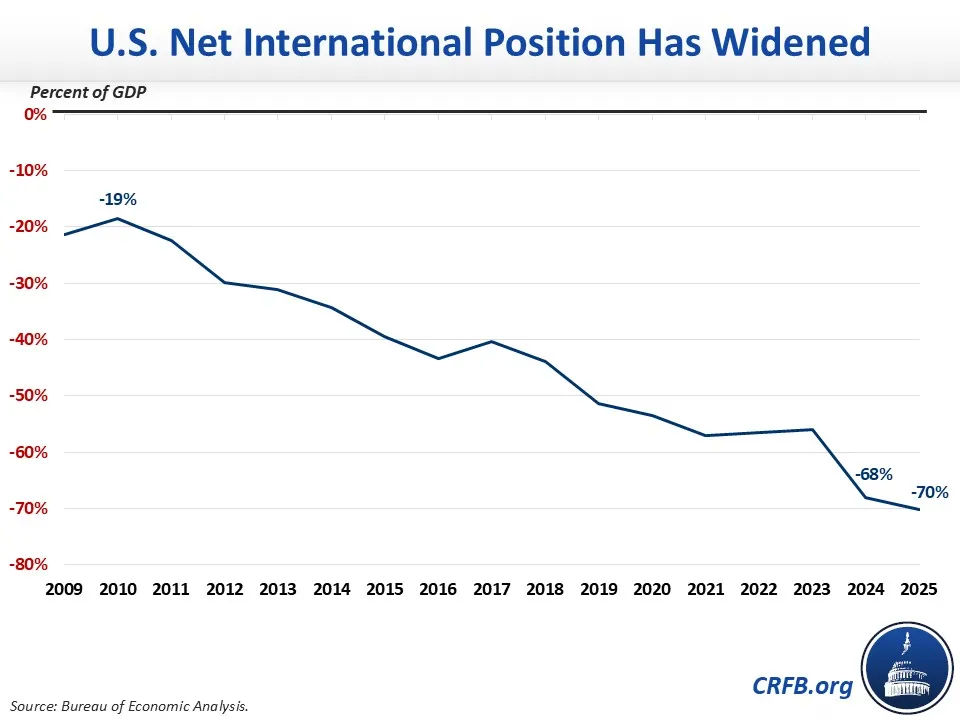
The U.S. net international investment position has been negative since the late 1980s, meaning Americans owe more to foreign investors than foreign investors owe to Americans. In just 15 years, the U.S. net international investment position as a share of Gross Domestic Product (GDP) has widened from -19% in 2010 to -53% in 2020 and further to -70% at the end of 2025 – a near fourfold increase.
Since the Global Financial Crisis, foreign governments and central banks have become less prominent holders of U.S. Treasuries, and foreign private investors have taken up a larger share of debt. Foreign private entities, along with other private holders of Treasuries, may be more sensitive to geopolitical and fiscal concerns.
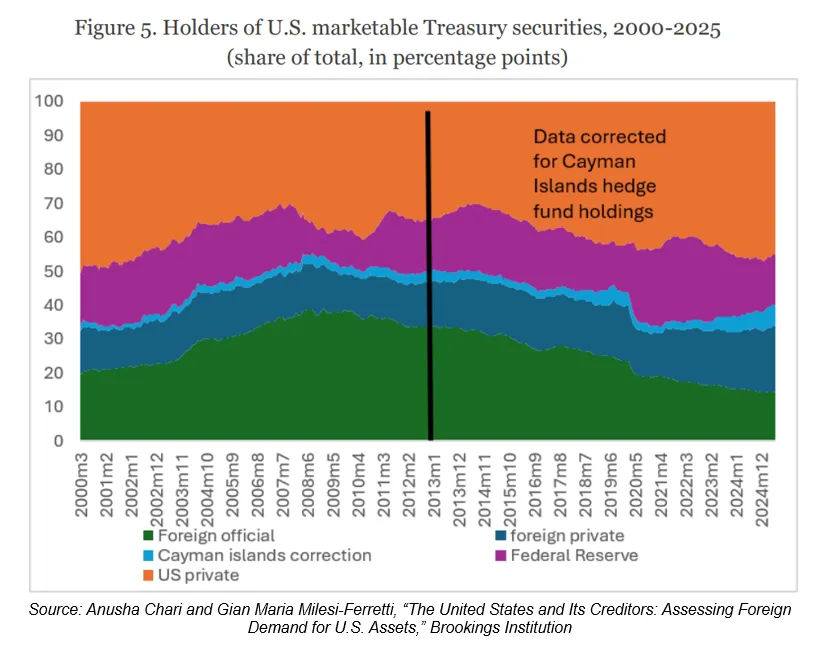
The authors point out three main reasons for weakened official demand for U.S. Treasuries, including:
- Slowing accumulation of foreign exchange reserves.
- Large purchases of Treasury securities by the Federal Reserve.
- Appreciation of the U.S. dollar against other reserve currencies.
Though most U.S. equities remain domestically owned, the rise in private investment becomes more of a concern as rising debt and rising interest rates increase debt-servicing costs, and Treasury yields may become more volatile. Yields could also be less likely to decline during periods of economic stress, times when the government historically relied on investors to buy Treasuries (a safe asset) and help lower interest rates. As the authors explain, “If foreign official demand remains subdued and private demand becomes more sensitive to risk or geopolitical factors, U.S. interest rates could become less countercyclical.”
The authors conclude that the country’s fiscal trajectory, the severity of geopolitical disruptions, and the makeup of foreign investment will continue to play an important role in Treasury market stability. Less reliable demand for Treasuries can lead to ever-increasing interest rates, which puts the U.S. at risk of a debt spiral or even a fiscal crisis. Lawmakers should have a plan in place for next economic crisis and take steps now to lower deficits and put debt on a sustainable path.