CBO: 1% Higher Interest Rates Add Trillions to Debt
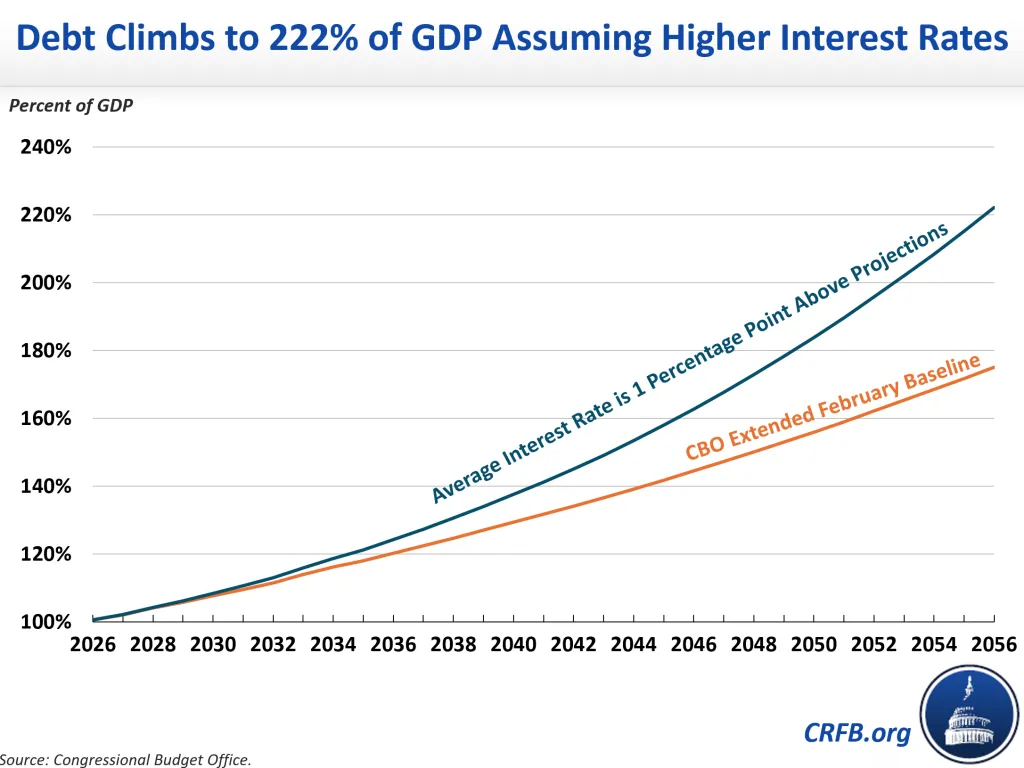
Interest rates across the yield curve have been hitting multi-decade highs, with the 30-year Treasury bond closing at 5.5% today – the highest level since 2004 – and the 10-year Treasury note closing at 5.2% – the highest level since 2007. The Congressional Budget Office (CBO) released a new analysis today showing that if interest rates grow to 1 percentage point above projections, as they already roughly are today, debt would be 222% of GDP by Fiscal Year (FY) 2056 – 47 percentage points of GDP above projections.
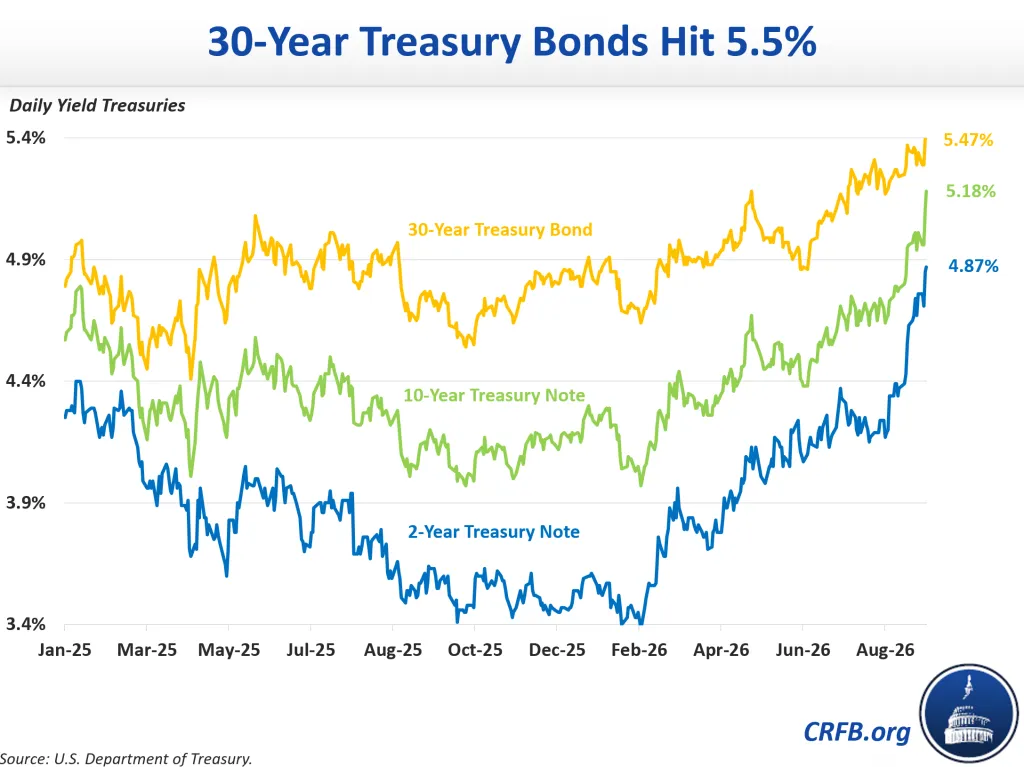
Although it is not certain why rates have been rising so dramatically in the last month, it’s likely that they are being fueled by higher oil prices, a hot consumer spending report, competition for borrowing due to AI investment, the Fed's recent decision to raise rates, and a weak Treasury auction – in addition to our unsustainable fiscal situation. CBO’s analysis shows how vulnerable we are to additional increases in interest rates above projections.
Under CBO’s alternative scenario, the average interest rate on the federal debt increases by about 5 basis points above baseline projections every year until it is 100 basis points (1 percentage point) above projections before macroeconomic effects. This equates to an average interest rate that is 48 basis points above baseline by 2036 and 132 basis points above baseline by 2056 after incorporating the macroeconomic effects that would push interest rates up further. Note that CBO assumes that the average interest rate on the federal debt is below the current 10-year Treasury yield until 2047 – so the actual fiscal situation could be even worse.
CBO estimates that a higher interest rate path would drive interest spending up from $1 trillion in 2026 to $2.5 trillion in 2036 and $10.6 trillion in 2056 – an additional $1.4 trillion in interest payments over the next decade and $35.7 trillion through 2056. Assuming the February baseline revenue estimates, interest spending would consume roughly 60% of revenue by 2056.
Deficits would grow from 5.8% of GDP in 2026 to 7.5% in 2036 and 14% in 2056. The debt-to-GDP ratio would climb from 101% in 2026 to 124% in 2036 and 222% in 2056. CBO estimates that GDP would grow to $93 trillion in 2056 under this alternate path – $2.7 trillion less than their February baseline estimate.
Rising interest rates are both driven by and contribute to higher debt. As debt rises, investors demand a higher term premium to compensate for additional risk. A higher term premium begets higher interest spending, resulting in even more borrowing. Higher debt can also slow economic growth, which would boost debt further and contribute to a vicious debt spiral.
Deficit reduction today is the best way to put downward pressure on interest rates, signal fiscal responsibility to bond holders, and put the debt on a sustainable path.