High Inflation Drives 3.6% Social Security COLA
Social Security beneficiaries will receive a 3.6% cost-of-living adjustment (COLA) in 2027, based on today’s inflation data. This COLA will be 0.8 percentage points higher than last year’s 2.8% COLA and 0.9 percentage points above what the Social Security Trustees recently projected. With Social Security’s retirement fund less than six years away from insolvency, action will be needed soon to prevent a 22% benefit cut that could wipe out the previous nine years’ worth of COLAs all at once in 2032.
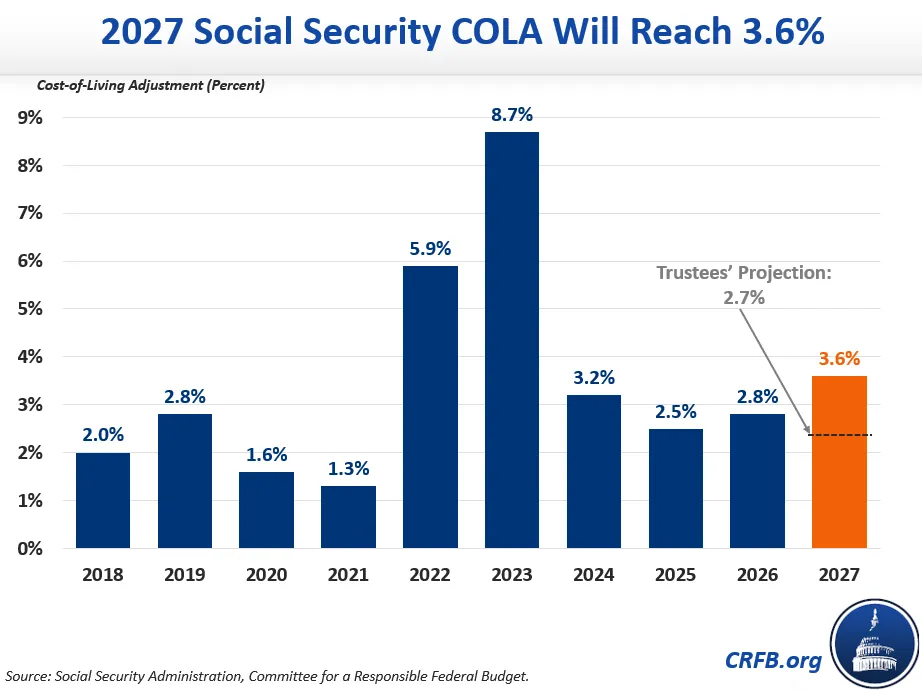
A 3.6% COLA will boost average benefits by about $900 per retiree but would provide an over $2,200 increase for the very richest beneficiaries. The highest earning couples who retired this year at their normal retirement age will enjoy a $3,600 combined increase – enough to push their combined benefits above $100,000 annually.
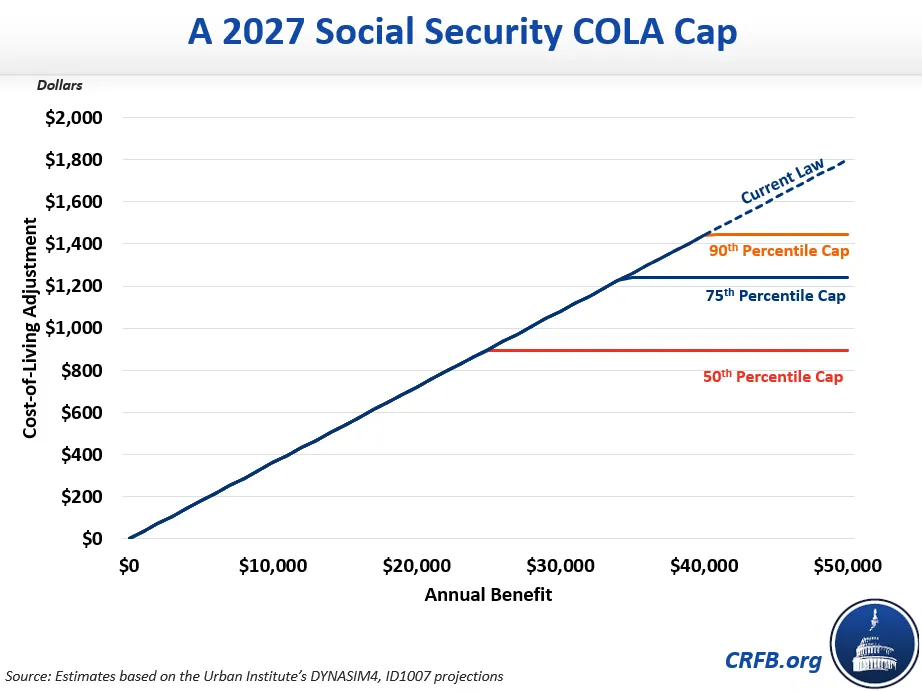
To help restore Social Security solvency, lawmakers should consider reforming future COLAs. This could be done by adopting the more accurate chained CPI or by adopting a COLA Cap that puts a dollar limit on the COLA, as suggested by our Trust Fund Solutions Initiative. Lawmakers could also put a Six Figure Limit on all benefits, including for the very wealthiest beneficiaries currently collecting benefits. Or they could consider a Flat-Rate COLA that limits COLAs at the top while boosting them at the bottom.
Under the COLA Cap proposal, all beneficiaries would continue to receive an annual COLA each year, but the COLAs received by the highest income retirees would be limited to the dollar amount received by those with just a relatively high income. For example, this year’s COLA could be capped at roughly $1,200 (adjusted for claiming age) – which would mean no change for roughly three-quarters of beneficiaries but would limit the increase at the very top.
With the insolvency of Social Security’s retirement trust fund just six years away – and with it a deep 22% benefit cut – policymakers should urgently begin the work of enacting trust fund solutions. Given the short time horizon, this should include consideration of COLA changes for current beneficiaries. But it must also include consideration of new or increased revenue sources as well as benefit reforms phased in for future beneficiaries.
Time is short, and policymakers should move quickly.
Tags
What's Next
-
Image

-
Image

-
Image