Any War Supplemental Should Be Responsibly Targeted
As the military conflict with Iran continues, there has been increasing discussion over a possible “war supplemental” to help fund the U.S. military and replenish weapons stocks. Some reports suggest the White House may request $50 billion in defense funding and other reports indicate this could be coupled with funding for farm aid, disaster relief, and other initiatives.
The following is a statement from Maya MacGuineas, president of the Committee for a Responsible Federal Budget:
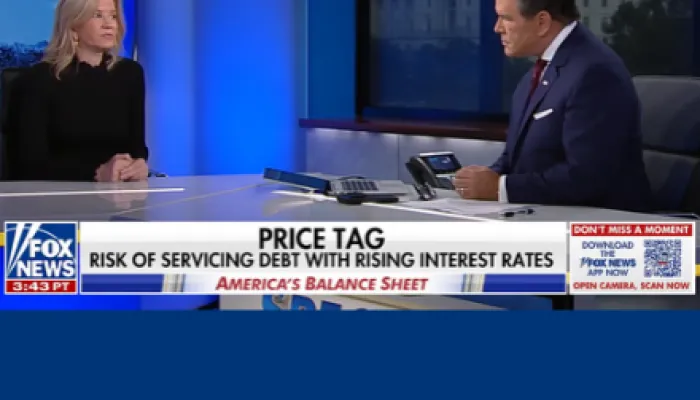
The conflict in Iran demonstrates why we need to keep our national debt at a reasonable level. Without the fiscal space to respond to emergencies and other urgent needs, we are left vulnerable. How can we prioritize our national security when we’re spending more on interest payments than national defense?
Given the $150 billion-plus of defense-related spending in the reconciliation law, there may not be a need for any supplemental funding. But if additional funding is needed, it should be enacted responsibly.
Any supplemental should be tightly focused on funding one-time emergency needs – not used as an excuse to pad ongoing funding streams or to inflate the defense baseline for future year appropriations.
Policymakers also need to avoid a Christmas Tree supplemental. This should be about giving the military the resources it needs in the war with Iran, not doling out farm aid, gas tax holidays, or health care subsidies.
Finally, a supplemental should be offset over time – ideally twice over by applying Super PAYGO – by coupling near-term costs with medium-term spending reductions, revenues, or both. With debt approaching record levels, we can’t afford to keep borrowing indefinitely.
Better yet, policymakers should begin undertaking efforts to put our debt on a more sustainable path, ensuring we have the fiscal space we need now and in the future. Earlier this week, we released a “Break Glass Plan” in preparation for the next national emergency. We may need such a plan sooner than any of us had hoped.
###
For more information, please contact Diana Muia, Communications Manager, at muia@crfb.org.