A Gas Tax Holiday Would Cost Billions Each Month
In the midst of the conflict with Iran and spiking oil prices, policymakers are reportedly considering – and some have introduced – a temporary gas tax holiday to reduce the price of gas for consumers. Without offsets, we estimate that a one month holiday could cost $3.5 billion while a six month holiday would cost about $21 billion and a three year holiday would cost $124 billion. Such a holiday could advance the insolvency of the Highway Trust Fund by two weeks to 17 months, to as soon as March of 2027. And any savings to the consumer would be partially offset by increases to gasoline and other prices.
Deficit Impact of Fuel Tax Holidays, 2026-2036
| Category | 1-Month Holiday | 3-Month Holiday | 6-Month Holiday | 1-Year Holiday | 3-Year Holiday |
|---|---|---|---|---|---|
| Lost Gas Tax Revenue | -$2.5 billion | -$7 billion | -$14 billion | -$28 billion | -$86 billion |
| Lost Diesel Tax Revenue | -$1 billion | -$2.5 billion | -$5 billion | -$11 billion | -$32 billion |
| Income & Payroll Tax Offset* | $1 billion | $2.5 billion | $5 billion | $10 billion | $29 billion |
| Primary Impact | -$2.5 billion | -$7.5 billion | -$15 billion | -$29 billion | -$89 billion |
| Debt Service Costs | -$1 billion | -$3 billion | -$6 billion | -$13 billion | -$35 billion |
| Deficit Impact | -$3.5 billion | -$10.5 billion | -$21 billion | -$42 billion | -$124 billion |
| Highway Trust Fund Insolvency Date | July 2028 (-2 Weeks) | June 2028 (-7 Weeks) | Sept. 2027 (-11 Months) | June 2027 (-14 Months) | March 2027 (-17 Months) |
*CBO estimates assume about 24% of lost excise tax revenue is recaptured by income and payroll taxes.
Figures may not add due to rounding.
Sources: CRFB estimates based on CBO projections.
Under the Congressional Budget Office’s (CBO) February 2026 baseline, the federal gasoline tax (18.4 cents per gallon) will bring in about $30 billion of revenue per year through 2036, while the tax on diesel (24.4 cents per gallon) will bring in about $11 billion annually. This revenue goes into the Highway Trust Fund (HTF) to finance the interstate highway system and other infrastructure.
An unpaid-for gas tax holiday would only marginally reduce consumer costs. The direct tax relief would reduce total household spending by about 0.2%. Meanwhile, producers would respond by increasing pre-tax prices and the stimulative effect of the holiday would put upward pressure on inflation or interest rates, eating into some of those savings.
At the same time, the holiday would meaningfully add to the national debt. A holiday for the gasoline tax alone would cost about $30 billion per year, increasing to $42 billion if also applied to diesel. This would accelerate the depletion of the HTF, which already faces persistent deficits and insolvency by 2028. A one month holiday would accelerate trust fund insolvency by roughly two weeks, while a six month holiday would accelerate insolvency by nearly a year.
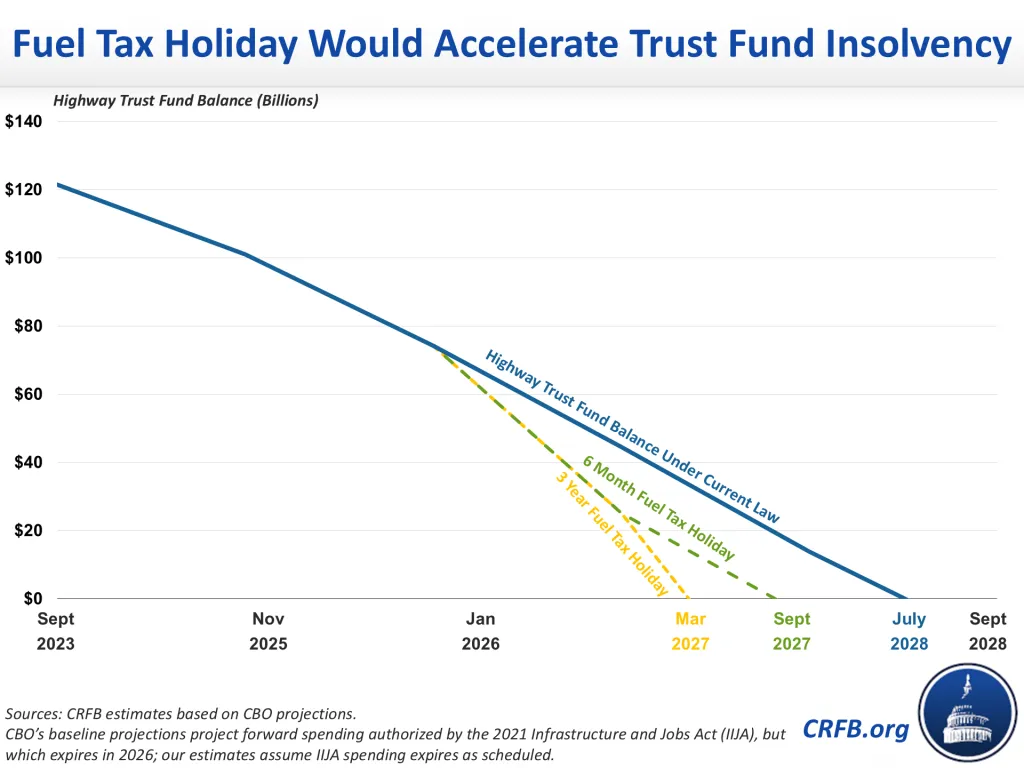
Lawmakers should avoid an unpaid-for gas tax holiday. If they choose to reduce gas taxes – despite the limited relief it would provide – they should offset the lost revenue with at least twice as much savings and fully replace the revenue in the HTF. They should also work to bring HTF spending and revenue in line, avoiding insolvency and ensuring sustainable trust fund financing now and in the future.