The State of Our Union is More Indebted Than Ever
President Trump will deliver the State of the Union address this evening before a joint session of Congress. The occasion offers the President the opportunity to establish his policy agenda for the year ahead, including his domestic and foreign priorities.
The following is a statement from Maya MacGuineas, president of the Committee for a Responsible Federal Budget:
As President Trump delivers his remarks later tonight, he will do so amidst a fiscal backdrop that’s worse than ever – and we’re eager to hear how he plans to meet this moment.
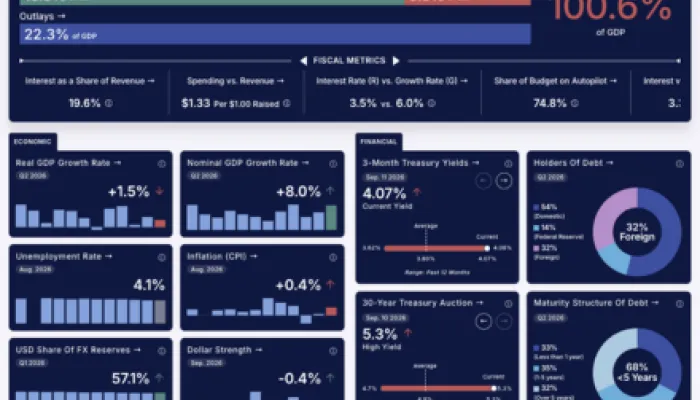
As it happens, the Congressional Budget Office recently published its latest outlook for the budget and economy, and its findings are as severe as they are sobering. This year’s address will be delivered to a nation more indebted than it has ever been outside a war or emergency, on a more precarious fiscal footing than ever before, and broadcast to an electorate that is eager for answers ranging from kitchen-table affordability issues to financial security in their retirement years.
We expect the President will spend time promoting the passage of his “One Big Beautiful Bill,” which CBO projects will add $4.2 trillion to the national debt through 2034, even after accounting for the economic growth from the law’s tax cuts. We’ll see a short-term “sugar rush” from all that economic stimulus, but it is unlikely to have a sustained effect on growth – and may even slow long-term growth as a result of additional borrowing. Meanwhile, the Supreme Court has ruled that the President’s tariffs under IEEPA authority are illegal, opening a massive revenue hole of nearly $2 trillion for the Administration and Congress to fill. We are glad to see the Administration already taking steps to replace this lost revenue – but ultimately the Administration and Congress must work to ensure a stable stream of revenue or alternative budgetary savings.
Ultimately, the President’s agenda thus far has added significantly to the national debt, and we will be spending even more because of our past refusal to pay for our priorities. Interest payments on the debt will total nearly $17 trillion between now and 2036; annual payments will rise from more than $1 trillion this year to more than $2 trillion by 2035.
Here’s what we would ideally hear this evening: a recognition that the United States has a debt problem, a problem that both parties have contributed to and that both parties will need to work together to correct; a call to meet an aggressive yet meaningful fiscal target, like the oft-mentioned 3% deficit-to-GDP target; a commitment to preventing Social Security and Medicare insolvency before time runs out; and the endorsement of a bipartisan commission to make all these solutions happen.
Our nation will celebrate its 250th birthday in a matter of months. We ought to be able to celebrate this momentous occasion secure in the knowledge that our elected leaders – from the President to the Congress – are taking our fiscal situation seriously and are prepared to deal with it effectively.
###
For more information, please contact Matt Klucher, Assistant Director for Media Relations, at klucher@crfb.org.